
The Precision Botanicals Revolution
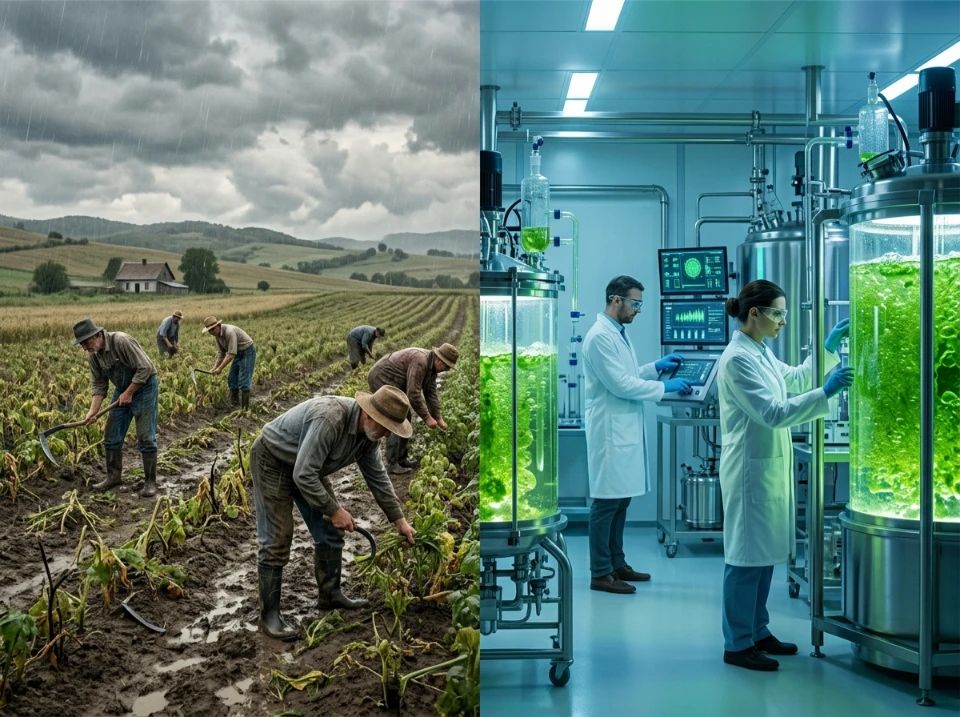
Navigating the Future of Food & Beverage with Plant Cell Culture
Executive Summary
Precision Botanicals – the production of standardized phytonutrients through plant cell culture and advanced bio-engineering – is no longer a future consideration. It is a present and rapidly growing force that is already reshaping the B2B food and beverage ingredient landscape. As the industry faces unprecedented supply chain volatility, climate change impacts, and a relentless consumer demand for absolute purity and functional consistency, traditional agricultural sourcing of botanical extracts is reaching its limits.
For B2B food and beverage ingredient manufacturers, understanding and adapting to this technological wave is not just a market opportunity – it is a strategic survival imperative. The rules of ingredient sourcing, standardization, and sustainability are being rewritten in real time, and companies that fail to grasp this shift risk becoming obsolete to the brands, retailers, and food service operators they supply.
This report deciphers the core characteristics of the Precision Botanicals market, analyzes the key technological trends driving adoption, and provides actionable strategic recommendations for B2B ingredient leaders. It also examines the intersecting forces of regulatory evolution and consumer demand for clean-label functionality.
| Commercial Readiness Transition from R&D to commercial-scale production | Plant-Based Bioactives Plants as production vehicles for complex molecules (e.g., HMOs) | Absolute Standardization Elimination of crop-to-crop variability |
Part I: Deconstructing the Precision Botanicals Paradigm
Precision Botanicals represent a fundamental break from every ingredient sourcing model that preceded it. Unlike traditional agriculture which relies on arable land, unpredictable weather patterns, and variable soil conditions, plant cell culture operates in fully controlled environments. This allows for the precise, consistent, and sustainable production of specific phytonutrients, colors, flavors, and functional compounds without ever growing the whole plant.
A recent market development underscored the urgency for food brands: Novella Innovative Technology, a pioneer in plant cell culture, appointed a new CEO specifically to lead the company’s transition from an R&D focus to full commercial operations [1]. This signals that the technology has matured past the proof-of-concept stage. Early engagement with these technologies is not merely a nice-to-have — it is the key to securing lasting supply chain resilience and brand loyalty across an entire product portfolio.
| Attribute | Description | Strategic Implication for B2B |
| Absolute Consistency | Production in controlled bioreactors ensures identical phytonutrient profiles in every batch. | Eliminates formulation adjustments due to seasonal crop variations. Guarantees functional efficacy. |
| Supply Chain Resilience | Decouples ingredient production from geopolitical instability, climate change, and shipping bottlenecks. | Drastically reduces supply chain risk and ensures continuous availability of critical ingredients. |
| Hyper-Sustainability | Requires a fraction of the land, water, and resources compared to traditional agriculture. Zero pesticide use. | Aligns perfectly with corporate ESG goals and consumer demands for environmentally responsible products. |
| Clean Label Purity | Free from heavy metals, microplastics, and agricultural contaminants. | Meets the highest standards of food safety and clean-label consumer expectations. |
| Customization | Ability to optimize cellular environments to enhance the expression of specific, high-value compounds. | Enables the creation of proprietary, highly differentiated functional ingredients. |
The Standardization Imperative
What makes Precision Botanicals fundamentally different is not just how they are produced — it is the absolute guarantee of what is produced. In traditional botanical sourcing, a company might purchase a batch of ginseng or saffron, only to find that the active compounds (ginsenosides or crocin) vary wildly depending on where it was grown, when it was harvested, and how much rain fell that season.
For B2B ingredient suppliers, this creates a profound implication: the ingredient is no longer subject to the whims of nature. It is a highly engineered, standardized component. The transition from synthetic food colors to natural, plant-derived colorants highlights this challenge perfectly. As reported by Food Engineering (2026), replacing a highly stable synthetic dye with a natural botanical pigment requires overcoming significant hurdles related to shear, thermal cycling, and light exposure [3]. Precision Botanicals solve this by offering standardized, highly stable plant extracts that behave predictably in complex food matrices. ‘Clean label’ is table stakes. ‘Standardized clean label’ is the competitive frontier.
OliveTree Lens
“The ingredient is no longer subject to the whims of nature. In a world where brands demand absolute consistency, Precision Botanicals offer standardized, highly stable plant extracts that behave predictably in complex food matrices. ‘Clean label’ is table stakes. ‘Standardized clean label’ is the competitive frontier.”

Part II: Key Trends Reshaping the Botanical Ingredient Landscape
Trend 1 — The Shift from Microbes to Plants as Production Vehicles
While precision fermentation using microbes (yeast, bacteria) has dominated the alternative protein conversation, a new frontier is opening up: using plant cells as the primary production vehicle for highly complex molecules.
This trend is driven by the biological reality that certain high-value compounds are better suited for plant-based expression systems. AgFunderNews (2026) highlighted the work of Totality Biosciences, a company exploring the use of plants to produce Human Milk Oligosaccharides (HMOs) for infant formula [2]. While microbial production of HMOs exists, plant-based systems may offer unique advantages in scalability, purification, and regulatory acceptance, particularly in highly sensitive categories like infant nutrition.
| “The production vehicle is the message. In a world where consumers demand naturality, producing complex bioactives through plant cell culture rather than microbial fermentation offers a compelling narrative advantage that resonates deeply with clean-label expectations.” — OliveTree Partners Insight |
Trend 2 — Functional Engineering of Plant Fibers and Proteins
The demand for plant-based products has evolved. Consumers no longer accept products that merely mimic the appearance of animal products; they demand superior texture, nutritional parity, and clean ingredients. This is driving a surge in the functional engineering of botanical ingredients.
Dutch meat alternatives company Schouten Europe recently launched a new plant-based fillet featuring a proprietary fiber structure [4]. This innovation demonstrates that botanical ingredients are moving beyond simple extracts; they are being engineered at the structural level to deliver specific sensory and functional outcomes. For ingredient suppliers, this translates into an accelerating demand curve for highly functional, structurally engineered botanical components that can solve complex formulation challenges in the plant-based sector.
Trend 3 — End-to-End Traceability and Precision Sourcing
The journey from farm to fork is becoming increasingly complex, and the demand for absolute transparency is non-negotiable. As highlighted by Thermo Fisher Scientific, advanced technologies and strategic partnerships are essential to managing this complexity [5].
Precision Botanicals inherently solve the traceability challenge. Because the ingredients are produced in controlled bioreactors rather than sprawling agricultural supply chains, the provenance of the ingredient is absolute. There is no risk of adulteration, cross-contamination, or unethical labor practices. This level of traceability is becoming a critical competitive differentiator for B2B ingredient suppliers pitching to major CPG brands.
Part III: The Regulatory and Market Evolution — A Force Multiplier for Strategic Change
Layered on top of the technological advancements in Precision Botanicals is a structural evolution in regulatory frameworks and market applications. As the technology matures, regulatory bodies are beginning to define the pathways to market for these novel ingredients.
A recent thematic report from the UK Food Standards Agency (FSA) and Food Standards Scotland (FSS) offered a comprehensive assessment of emerging technologies in the food system, specifically highlighting novel proteins and emerging food technologies for animal feed applications [6]. This indicates that the regulatory landscape is actively adapting to accommodate plant-based and botanical ingredient innovations, not just in human food, but across the entire agricultural value chain.
The Ingredient Opportunity Within the Precision Botanicals Wave
For B2B food ingredient companies, the Precision Botanicals revolution is not a threat — it is the most significant differentiation opportunity in a generation. The challenge lies in identifying which ingredient categories will benefit most from plant cell culture and building the strategic capabilities to capture that demand.
The immediate opportunities lie in high-value, low-volume ingredients where traditional agricultural sourcing is fraught with challenges:
- High-Value Phytonutrients: Ingredients like saffron extract, ginseng, or rare antioxidants where crop variability drastically affects the concentration of active compounds. Precision Botanicals guarantee standardized efficacy.
- Natural Colorants and Flavors: As brands move away from synthetic dyes, the demand for stable, consistent natural colors is surging [3]. Plant cell culture can produce highly concentrated, stable pigments without the land use requirements of traditional crops.
- Complex Bioactives: Molecules like HMOs [2] or specific botanical peptides that are difficult or expensive to extract from whole plants or produce via microbial fermentation.
- Sustainable Alternatives to Endangered Botanicals: Producing extracts from rare or over-harvested plant species, offering a highly sustainable and ethical alternative to wild-harvesting.
Part IV: Strategic Imperatives for B2B Leadership
To capitalize on the Precision Botanicals revolution, executive teams must move beyond a “wait-and-see” approach and adopt a proactive, strategic framework. Drawing from the core competencies of OliveTree Partners, we propose four essential imperatives.
Imperative 1 — Master the Innovation Pipeline for High-Value Differentiation
Precision Botanicals are no longer a future concept; they are a present-day commercial reality that is fundamentally reshaping the ingredient market. Companies like Novella are transitioning to commercial operations [1], proving that the technology can scale.
Strategic Action: B2B ingredient companies must treat Precision Botanicals as a core strategic pillar. This requires a shift in mindset from traditional agricultural sourcing to advanced biomanufacturing. Leaders must ask: Should we build our own plant cell culture capacity, partner with a specialized technology provider, or acquire a promising startup?
How OliveTree Partners Adds Value: Leveraging our Leadership in Innovation pillar, OliveTree Partners can guide clients in developing a bespoke biotech strategy, identifying the right partnership models, and positioning these novel ingredients to command a premium in the market.
Imperative 2 — Redefine Go-to-Market Strategy with Absolute Traceability
The traditional sales pitch based on price and basic specifications is obsolete in the face of ingredients that offer absolute consistency, guaranteed purity, and hyper-sustainability.
Strategic Action: Companies must integrate the unique value propositions of Precision Botanicals into their core go-to-market strategy. This involves educating B2B customers on the total cost of ownership — highlighting how standardized ingredients reduce formulation time, eliminate batch rejections, and mitigate supply chain risk.
How OliveTree Partners Adds Value: Through our Business Development & Go-to-Market services, OliveTree Partners can help clients restructure their sales narratives, target the most receptive market segments, and build strategic partnerships that leverage the unique benefits of plant cell culture.
Imperative 3 — Navigate the Regulatory and Consumer Landscape with Strategic Foresight
Innovation is only valuable if it can reach the market and be accepted by consumers. The path to commercialization is paved with regulatory approvals and shaped by consumer perception. As Precision Botanicals become more prevalent, transparency and clear labeling will be paramount.
Strategic Action: Leadership must develop a robust strategic foresight capability focused on the evolving regulatory landscapes [6] and consumer sentiment towards terms like “cell-cultured” versus “plant-derived.” Proactive engagement with regulatory bodies and investing in B2B customer education are critical risk mitigation strategies.
How OliveTree Partners Adds Value: OliveTree Partners’ expertise in Marketing Stratégique provides the framework to monitor non-technical risks, develop compelling and transparent value propositions, and build trust with both customers and end consumers. From where I stand, the narrative must focus on the purity and sustainability of the process, not just the technology itself.
Imperative 4 — Build a Biotech-Ready Organization
The most advanced technology is useless without the human capital to leverage it. The transition to Precision Botanicals demands a new kind of talent: bioprocess engineers, plant biologists, and regulatory experts. Competing for this talent and integrating it into a traditional food industry culture is a significant leadership challenge.
Strategic Action: Companies must initiate a profound human-centric leadership transformation. This involves upskilling the existing workforce, creating an organizational structure that breaks down silos between technical and commercial teams, and fostering a culture of continuous learning. Leaders themselves must become fluent in the language and implications of plant biotechnology.
How OliveTree Partners Adds Value: This is the core of OliveTree Partners’ mission. Through executive Coaching & Transformation Humaine, we equip leadership teams with the skills, vision, and resilience to lead their organizations through this complex transformation, ensuring the entire company is aligned to seize the biotech opportunity.
The Four Pillars of OliveTree’s Value Proposition
| Pillar | What It Delivers | Why It Matters Now |
| Leadership in Innovation | Agile innovation processes, pipeline governance, culture of continuous development | Precision Botanicals demand rapid, science-backed decision-making. Linear R&D is a competitive liability. |
| Business Development & Go-to-Market | International expansion strategy, launch architecture, partnership development, commercial execution | The path to market for cell-cultured ingredients requires new partnership models and precision. |
| Strategic Marketing & Branding | Differentiated positioning, brand identity, stakeholder value propositions | Ingredient brands must articulate precision botanical advantages across the entire B2B value chain. |
| Coaching & Human Transformation | Executive mindset development, adaptive leadership, organizational alignment | Transformation is a human challenge. No strategy survives without leadership capacity to carry it. |
Conclusion: Your Partner in the Botanical Revolution
The rise of Precision Botanicals is a structural transformation of the B2B ingredient supply chain. It requires more than just capital investment; it demands a fundamental rethinking of strategy, innovation, and leadership. The companies that thrive will be those that embrace this complexity with a clear vision and an agile, forward-thinking approach.
| OliveTree Partners is uniquely positioned to be the essential ally for B2B leaders on this journey. By integrating our deep expertise in go-to-market strategy, agile innovation, strategic marketing, and leadership transformation, we provide the comprehensive 360° support necessary to not just navigate the Precision Botanicals revolution, but to lead it. |
OliveTree Partners is your partner for this journey.
References
[1] Novella taps new CEO and bets on ‘precision botanicals’ for consistent ingredients — NutraIngredients.com
[2] Totality Biosciences bets on plants to scale human milk oligosaccharides for a wider audience — AgFunderNews
[3] Plant and Process Considerations for Switching to Natural Food Colors — Food Engineering
[4] Schouten Europe unveils plant-based fillet using proprietary fibre technology — FoodBev Media
[5] From farm to fork: How advanced technologies and strategic partnerships are shaping F&B production — FoodBev Media
[6] The future of animal feed: Novel proteins and the UK’s emerging food technologies — All About Feed