
ALDI CLEAN LABEL
Industry Transformation
Ingredients Expertise
THE CLEAN LABEL TIPPING POINT
EXECUTIVE SUMMARY
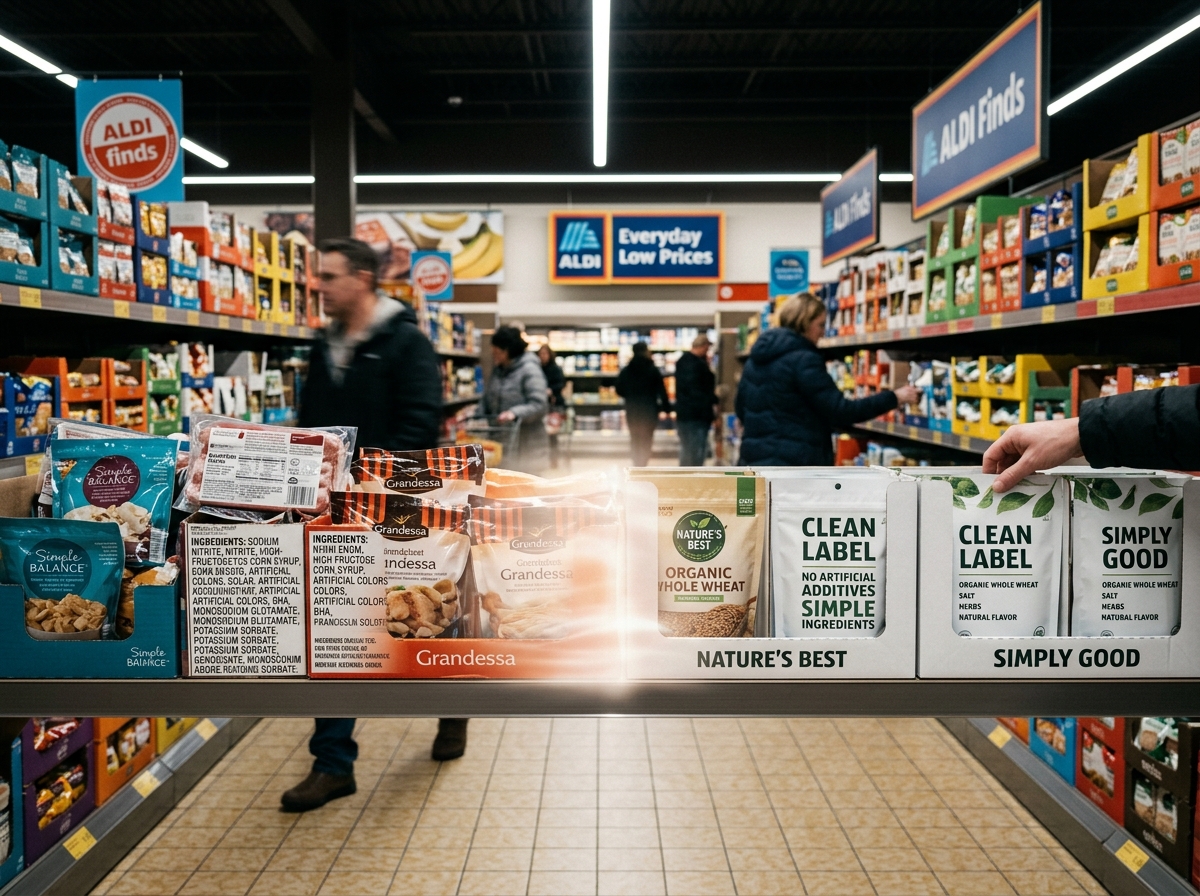
The landscape of food and beverage formulation has experienced a seismic shift. ALDI’s recent announcement to eliminate an additional 44 ingredients from its private label assortment by December 2027 – expanding its restricted ingredients list from 13 to 57 – represents far more than a retailer updating its product specifications. It is a structural transformation in the global food ecosystem, signaling that clean label has moved from a premium niche positioning to the baseline standard for mass-market retail.
This sweeping mandate targets a wide array of functional additives, including artificial colors like titanium dioxide, dough conditioners like bromated flour, and synthetic sweeteners like neotame. By effectively legislating through its immense purchasing power, ALDI is moving faster than regulatory bodies and setting a new benchmark that will inevitably influence the entire industry. As private label products continue to capture market share, the ‘ALDI standard’ will become the de facto industry standard.
For B2B food ingredient manufacturers and suppliers, this development presents both an existential threat and an unprecedented opportunity. The removal of 44 functional ingredients creates massive formulation gaps across countless product categories. Suppliers who can rapidly develop, scale, and supply clean, natural alternatives that match synthetic performance will dominate the next decade of food innovation. Conversely, those who fail to adapt risk exclusion from one of the world’s largest retail networks.
This report deciphers the strategic implications of ALDI’s clean label expansion, analyzes the key trends driving this shift, and provides actionable recommendations for B2B ingredient leaders. OliveTree Partners is positioned as the essential strategic ally to help organizations navigate this formulation revolution, turning a complex regulatory and retail challenge into a formidable competitive advantage.
| Market Signal | Formulation Shift | Strategic Impact |
| ALDI’s 44 Ingredient Ban | Elimination of key synthetic additives, colors, and sweeteners | Shift from niche clean label to mass-market baseline standard |
| Private Label Dominance | Retailers dictating formulation rather than accepting CPG standards | Suppliers must align directly with retailer specifications |
| Consumer Demand for Transparency | Zero tolerance for complex, chemical-sounding ingredient lists | Premium pricing for functional, natural alternatives |
PART I: DECONSTRUCTING THE ALDI CLEAN LABEL PARADIGM
To understand the magnitude of this shift, one must recognize the scale and influence of ALDI’s private label strategy. Unlike traditional retailers where private label represents a fraction of the assortment, ALDI’s business model is built almost entirely on its own brands. When ALDI changes a formulation standard, it impacts thousands of SKUs simultaneously.
ALDI’s decision to expand its restricted ingredients list to 57 items is not a sudden pivot, but the acceleration of a long-term strategy. More than a decade ago, the retailer removed 13 initial ingredients. This new phase, culminating in December 2027, targets ingredients that are currently functional staples in many B2B portfolios.
| Ingredient Category | Targeted Additives | Strategic Implication for B2B |
| Artificial Colors | Titanium dioxide, synthetic dyes | Intense demand for natural color innovations that approach synthetic-level performance. |
| Dough Conditioners | Bromated flour | Bakery suppliers must reformulate core products without sacrificing texture or shelf life. |
| Sweeteners & Flavor Enhancers | Neotame | Drives innovation in natural high-intensity sweeteners and flavor modulation technologies. |
| Preservatives | Various synthetic preservatives | Accelerates the need for natural preservation methods and advanced packaging solutions. |
Retailers as De Facto Regulators
The most profound aspect of ALDI’s initiative is its role as a de facto regulator. In many jurisdictions, the 44 ingredients ALDI is banning are perfectly legal and widely used. However, by leveraging its market power, ALDI is effectively outlawing these ingredients within its supply chain.
For a B2B ingredient supplier, this means that compliance with government regulations is no longer sufficient. You must comply with the ‘ALDI standard.’ Furthermore, when a major retailer makes such a public commitment to ingredient transparency, it creates a ripple effect. Competitors are forced to respond, and eventually, regulatory bodies often follow suit, formalizing the standards that retailers have already enforced.
PART II: KEY TRENDS RESHAPING THE INGREDIENT LANDSCAPE
Trend 1 – Natural Innovations Approaching Synthetic Performance
The primary challenge of the clean label movement has always been performance. Synthetic ingredients were developed for a reason: they are stable, cost-effective, and highly functional. Removing them often compromises taste, texture, visual appeal, or shelf life.
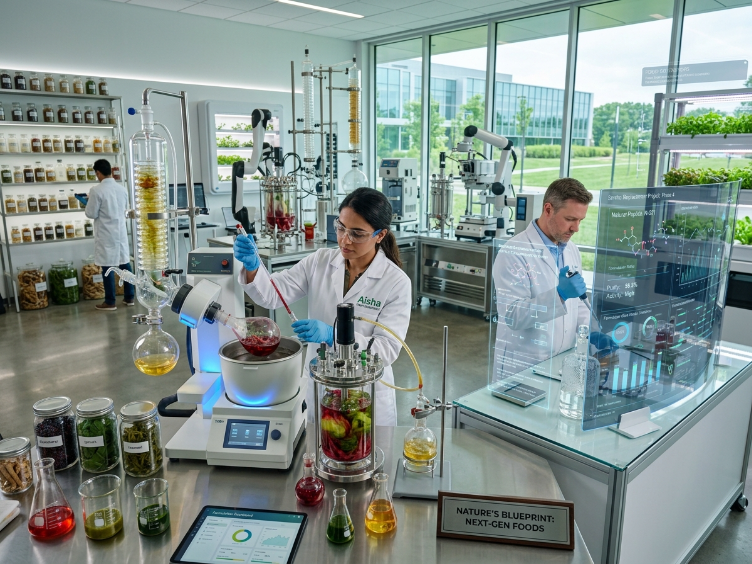
However, the industry is witnessing a rapid convergence of agriculture, biotechnology, and advanced formulation. Natural colors are no longer aimed at just being a clean label alternative; they are being engineered to match artificial performance. This trend extends across all ingredient categories. The suppliers who will win in the post-ALDI landscape are those investing heavily in R&D to close the performance gap between natural and synthetic ingredients.
| “”The clean label conversation has shifted from ‘what we remove’ to ‘what we replace it with.’ The winners will not be those who simply offer a clean label, but those who offer a clean label without forcing the consumer to compromise on sensory experience or shelf life.” – OliveTree Partners Insight |
Trend 2 – The Rise of ‘Clean Functional’ Products
As the baseline expectation for clean label rises, brands are seeking new ways to differentiate. This is driving the convergence of clean label and functional nutrition. It is no longer enough for a product to simply lack artificial ingredients; it must also actively promote health.
We see this trend accelerating in categories like beverages, where brands like Capri Sun are launching functional hydration lines that maintain a clean label positioning while adding electrolytes and other benefits. For B2B suppliers, this means developing ingredients that serve dual purposes: replacing a banned synthetic additive while simultaneously offering a marketable health benefit.
Trend 3 – Precision Formulation and Sodium Reduction
While ALDI’s list focuses on specific banned additives, the broader clean label movement also encompasses the reduction of controversial but ubiquitous ingredients like sodium and sugar.
F&B companies are facing mounting pressure to cut sodium levels, particularly in snacks, where a drop-off in taste can severely impact consumer acceptance. Innovations like Saltwell’s one-to-one replacement for standard salt demonstrate how suppliers are using advanced processing to create natural ingredients that solve complex formulation challenges. The ability to provide these precision formulation solutions is becoming a critical competitive advantage.
PART III: THE STRATEGIC IMPLICATIONS FOR B2B INGREDIENT LEADERS
ALDI’s 2027 deadline creates a ticking clock for the B2B food industry. The strategic implications are immediate and profound.
The Cost of Inaction
The most immediate risk is exclusion. If your ingredient portfolio relies heavily on the 44 targeted additives, you are effectively locked out of ALDI’s private label supply chain. Given ALDI’s growth trajectory, this represents a massive loss of potential revenue. Furthermore, as other retailers adopt similar standards, the market for these synthetic ingredients will rapidly shrink. The cost of inaction is not stagnation; it is obsolescence.
The Premium of Compliant Innovation
Conversely, the formulation gaps created by ALDI’s ban represent a massive commercial opportunity. B2B suppliers who can rapidly bring to market natural alternatives for titanium dioxide, bromated flour, and neotame will find a highly receptive and motivated customer base. These compliant innovations will command premium pricing and secure long-term, high-volume contracts as manufacturers scramble to meet the 2027 deadline.
PART IV: STRATEGIC IMPERATIVES FOR B2B LEADERSHIP
To navigate this formulation revolution, executive teams must adopt a proactive framework. Drawing from the core competencies of OliveTree Partners, we propose four essential imperatives for B2B food industry leaders.
1. Conduct a Portfolio Vulnerability Audit
Strategic Action: Initiate a comprehensive audit of your product lines. Identify the revenue tied to the 44 banned ingredients and the technical challenges involved in replacing them.
How OliveTree Partners Adds Value: Leveraging our Leadership in Innovation pillar, OliveTree Partners can guide clients in assessing their portfolio vulnerability, identifying the right technological partnerships or acquisition targets to fill formulation gaps, and accelerating the R&D pipeline for natural alternatives.
2. Redefine Go-to-Market Strategy Around Formulation Agility
Strategic Action: Integrate your clean label capabilities into your core value proposition. Train your commercial teams to sell ‘formulation agility’ and ‘retail compliance’ alongside the physical ingredient.
3. Proactive Retailer Alignment and Strategic Foresight
Strategic Action: Establish a continuous monitoring mechanism for retail trends and consumer sentiment regarding ingredients. Engage proactively with major retailers to understand their long-term clean label roadmaps before they become public mandates.
4. Foster a Culture of Adaptive Leadership
Strategic Action: Initiate a human-centric change management program. Ensure that leadership understands the strategic urgency of the clean label mandate, and that cross-functional teams are empowered to take risks and accelerate the innovation cycle.
CONCLUSION: MASTERING THE NEW RULES OF FORMULATION
ALDI’s decision to ban an additional 44 ingredients fundamentally alters the risk and reward profile of the global food ingredient supply chain. The days of relying on legacy synthetic additives are ending. Clean label formulation is now the mandatory baseline for mass-market retail success.
For B2B ingredient leaders, this is a moment of profound opportunity. Those who embrace this formulation challenge will not only insulate themselves from retail exclusion; they will establish themselves as the indispensable innovation partners for the world’s largest food manufacturers.
OliveTree Partners adds value as a full-spectrum strategic partner, meeting clients at every critical inflection point of the clean label transition – across four interconnected levels:
- From diagnosis to action – identifying portfolio vulnerabilities and connecting clients to the right partnerships, acquisition targets, and R&D pathways.
- From product to market – bridging formulation capability with commercial storytelling, turning compliance into a competitive differentiator.
- From reactive to anticipatory – building the intelligence frameworks that keep leadership ahead of retailer and consumer trends before they become mandates.
- From strategy to culture – addressing the human dimension of transformation through executive coaching and change management, ensuring strategy translates into organizational alignment.
Uniquely positioned at the intersection of formulation science, retail strategy, and consumer demand, OliveTree Partners integrates deep expertise in go-to-market strategy, agile innovation, and leadership transformation to provide the comprehensive 360° support necessary to turn the clean label imperative into your greatest competitive advantage – compressing the distance between disruption and opportunity, with leadership teams that are equipped, confident, and ahead of the curve.
REFERENCES
[1] ALDI Corporate Newsroom: ALDI Eliminating an Additional 44 Ingredients
[2] Grocery Dive: Aldi to remove 44 ingredients from private label assortment
[3] FoodNavigator USA: Aldi ramps up clean-label push with 44 new ingredient bans
[4] Food Ingredients First: Natural color innovations approach synthetic-level performance
[5] Baking Business: Aldi removing more ingredients from private label line
[6] ALDI USA LinkedIn: Aldi Expands Clean-Label Initiative
[7] Food Ingredients First: Kraft Heinz’s Capri Sun expands into functional beverages
[8] Food Ingredients First: Saltwell expands Chile operations to scale low-sodium salt production